New Westminster, BC
March 1, 2026 By: Dustin McColl
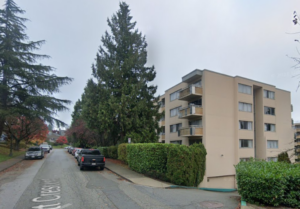
Location: McBride Blvd @ Mott Crescent
The Royal City: An Ecological History of New Westminster
I live in New Westminster, British Columbia, a city situated on the north bank of the Fraser River, approximately 20 kilometers east of Vancouver. As noted in The Canadian Encyclopedia by Patricia E. Roy and Erin James-Abra, the city was incorporated in 1860 and is famously recognized as the oldest city in Western Canada. My neighborhood is characterized by a blend of historic Victorian architecture and modern urban density, yet its physical environment hides a complex ecological history of transformation, from ancient old-growth forests to an industrial stump city, and finally to a modern urban center focused on environmental stewardship.
Pre-Contact Use and Settlement
For over 10,000 years before European arrival, the area now known as New Westminster served as a central gathering place for Halkomelem-speaking peoples, according to reporting by the editors of BCBusiness. The Lost Streams of New Westminster Project records that this landscape was originally a diverse temperate biozone dominated by massive, old-growth coniferous forests of western red cedar, Douglas fir, and hemlock. The City of New Westminster’s report, Truth Before Reconciliation: Our Journey, emphasizes that Indigenous groups, including the Musqueam, Squamish, Tsleil-Waututh, Katzie, Kwantlen, Kwikwetlem, and Qayqayt Nations, maintained deep and far-reaching connections to this land.
These local Nations lived by a seasonal round, utilizing the Fraser River and its tributaries for fishing villages and resource gathering, as described in the video presentation The Threads of a Great Promise. The Lost Streams Project identifies the mouth of Glenbrook Creek, known as Stautlo, as a vital summer fishing site for many of these Nations. The promontory of the city itself was once known as sχʷəyem, a sacred space named after a stone marker tied to the stories of Xexá:ls (the Transformers), according to the narratives shared in The Threads of a Great Promise. The City’s “Indigenous People and Reconciliation” web page acknowledges that this Indigenous presence represented a sophisticated form of ecological management that was largely made invisible by subsequent colonial settlement.
Early Settlement and Resource Extraction
The ecological character of the region shifted dramatically in 1859 when the Royal Engineers established New Westminster as the first capital of colonial British Columbia, a history detailed by Patricia Roy. The city was surveyed and named in honour of Queen Victoria, and served as a mercantile hub during the Fraser River and Cariboo gold rushes.
Early colonial industry focused heavily on the aggressive extraction of natural resources. The City’s Year of Truth Journal notes that massive timber mills were established to clear the old-growth forests, earning the settlement the early nickname Stump City because of the prodigious number of stumps left behind by the Royal Engineers and early settlers. Along the riverfront, the salmon canning industry became a major employer, significantly altering the aquatic ecosystem of the Fraser River, as recorded in The Canadian Encyclopedia. By the late 19th century, the city had evolved into a major transportation hub, with the completion of rail lines like the Canadian Pacific Railway in 1886 further cementing its status as an industrial center.
Wildlife: Past and Present
Urbanization and industrialization caused significant shifts in local biodiversity. Historically, the area teemed with wildlife that is now rare or extirpated, including Sandhill Cranes, Lewis’s Woodpeckers, and sea otters; a connection reflected in the naming of the modern təməsew̓txʷ (Sea Otter House) Aquatic and Community Centre.
Today, wildlife has adapted to the urban mosaic. The City of New Westminster’s “Wildlife” documentation notes that black bears are frequently spotted in Hume Park, where the forest backs onto the Brunette River, and coyotes are a common presence in Queen’s Park and the Glenbrook Ravine. Other resilient species, such as Great Blue Herons and Bald Eagles, continue to nest near the riverfront, symbols of a persistent but altered ecosystem described in the City’s historical summary, The Royal City: A History of Nature and Urbanism.
Invasive Species and Restoration
Like many urban areas, New Westminster faces a constant struggle with aggressive invasive species that threaten native biodiversity. The Royal City: A History of Nature and Urbanism identifies several high-priority invaders, including Giant Hogweed, Japanese Knotweed, Himalayan Blackberry, and English Ivy. The City’s “Natural Areas, Habitat & Biodiversity” page explains that these plants often overtake open areas, providing low-quality habitat compared to native vegetation. Additionally, insects like the European Chafer Beetle and European Fire Ant have disrupted local lawns and soil health.
Since 2017, community-led stewardship has targeted these threats. A prime example is the restoration of Glenbrook Ravine, where, as described on the City’s “Natural Areas” page, volunteers work to remove blackberry and ivy and replant native species to restore the ravine’s ecological function.
Urban Development and Stewardship Actions
As the city deindustrialized in the late 20th century, New Westminster shifted toward a vision of environmental leadership, according to the City’s Environmental Strategy and Action Plan (ESAP). Today, the City manages growth through this framework, which, as the editors of BCBusiness highlight, targets a zero-carbon future by 2050. This modern urban development incorporates several innovative stewardship actions outlined in the ESAP:
- Urban Stormwater Retention: The City implements an Integrated Stormwater Management Plan to reduce the impact of runoff on natural watercourses, establishing targets to capture the first 25–50mm of each rainfall event on-site.
- Green Infrastructure: Strategies include the use of “Green Amenity Streets” that showcase rain gardens and porous materials to filter water back into the soil naturally.
- Community Gardens: To improve food security and community health, the City partners with residents to maintain community gardens, as noted in the ESAP. These spaces allow residents to “naturescape” using drought-tolerant native species.
- Composting and Waste: The ESAP highlights the City’s commitment to minimizing waste generation and maximizing diversion from landfills.
In conclusion, the ecological history of New Westminster is a story of transition from a balanced Indigenous landscape to an era of industrial extraction, followed by a modern attempt to reconcile urban growth with environmental health. While the old-growth forests are gone, the city’s current focus on its “Year of Truth” initiative and sustainable infrastructure suggests a renewed respect for the land’s original connections and future resilience.
Bibliography
BCBusiness Editors. “New Westminster: Where community, economy and innovation meet.” BCBusiness. March 14, 2025..
City of New Westminster. “Environmental Strategy Action Plan (ESAP).” Draft for Council. May 28, 2018..
City of New Westminster. “Indigenous People and Reconciliation.” As of March 1, 2026.
City of New Westminster. “Natural Areas, Habitat & Biodiversity.” As of March 1, 2026.
City of New Westminster. “The Royal City: A History of Nature and Urbanism.” Historical summary, as of March 1, 2026.
City of New Westminster. “təməsew̓txʷ Aquatic and Community Centre.” as of March 1, 2026.
City of New Westminster. “The Threads of a Great Promise.” Transcript of video presentation, as of March 1, 2026.
City of New Westminster. Truth Before Reconciliation: Our Journey. New Westminster, BC: City of New Westminster, June 2023.
City of New Westminster. “Wildlife.” As of March 1, 2026.
The Lost Streams of New Westminster Project. “Timeline.” As of March 1, 2026.
Roy, Patricia E., and Erin James-Abra. “New Westminster.” The Canadian Encyclopedia. Updated September 11, 2023.