Fairview
June 30, 2026 By: Nicole Collette
Location: 3196 Heather Street, Vancouver, BC
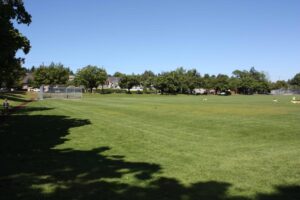
Sitting on my patio at Heather and 16th, I am surrounded by a completely human-engineered environment, yet looking closely reveals layers of a hidden ecological history. Before the rigid grid system carved up this hillside, this was part of a rich coastal wilderness where towering temperate rainforests met a complex web of wild, salmon-bearing creeks.¹ For millennia, the Musqueam, Squamish and Tsleil-Waututh nations sustainably managed this ecosystem.
This equilibrium shattered in the 1860s when colonial loggers completely clear-cut the slopes to feed local sawmills, destroying the ancient watershed canopy and causing massive topsoil erosion.² By the early 1900s, streetcar lines accelerated rapid urbanization, paving over the landscape and forcing the historic streams into subterranean storm sewers.³ Today, Douglas Park serves as a beautiful yet completely manufactured green lung for my community, curation replacing native biodiversity. Still, resilient native birds, like crows and Steller’s jays, alongside highly adaptable predators, like the coyotes that migrated to town in the 1980s, serve as a daily reminder nature refuses to be entirely engineered out of Fairview.⁴
1 – Sharon Proctor, Vancouver’s Old Streams (Vancouver Aquarium, 1978); British Columbia Ministry of Forests, “The Coastal Western Hemlock Zone.”
2 – City of Vancouver, “Fairview Neighbourhood History and Heritage,” City of Vancouver Community Archives; Old Hastings Mill Store Museum, “Our History.”
3 – Transit Museum Society of British Columbia, “The Fairview Loop and Early Interurban Lines.”
4 – City of Vancouver, “Urban Coyotes in Vancouver Communities.”