Kamloops British Columbia
June 6, 2026 By: okafor chichi
Location: 1370 tranquille road British columbia
Exercise #1: Local Environmental History
Environmental History of Tranquille Road, Kamloops, British Columbia
I live near Tranquille Road in Kamloops, British Columbia. Compared to larger cities, Kamloops has always felt calm to me. Sometimes it feels almost like a retirement city because of its slower pace of life and quiet neighbourhoods. At the same time, it is also a student city because of the presence of Thompson Rivers University, and many younger people move here to study. One of the first things I noticed about Kamloops was the landscape itself. The city is surrounded by hills, dry grasslands, and river valleys that shape both its appearance and the way people live. Looking more closely at the environmental history of this area helped me realize that the environment around Tranquille Road is the result of thousands of years of interaction between people and nature.
Long before European settlement, Kamloops was part of the traditional territory of the Secwépemc people, specifically the Tk̓emlúps te Secwépemc community. Indigenous peoples had lived in this region for thousands of years and developed sophisticated ways of managing the environment. According to the Tk̓emlúps te Secwépemc website, the rivers, grasslands, and forests supported fishing, hunting, gathering, and seasonal movement throughout the year. The Thompson River system provided salmon, which was an essential food source and an important part of cultural life. Indigenous communities also used controlled burning to maintain grasslands, encourage plant growth, and reduce wildfire fuel. Rather than viewing nature as something separate from people, Indigenous stewardship reflected a close relationship between communities and the environment.
The natural environment around Kamloops is very different from the coastal regions of British Columbia. The area is classified as a semi-arid grassland ecosystem with hot, dry summers and relatively mild winters. The hills surrounding Tranquille Road are part of this unique landscape. Native grasses and shrubs once dominated these slopes, supporting wildlife such as deer, elk, coyotes, black bears, and numerous bird species. The Thompson Rivers also supported healthy salmon populations. Today, some of these species remain common, although urban growth has altered their habitats.
European settlement began to reshape the environment during the nineteenth century. The fur trade brought newcomers into the region, followed by ranchers, miners, and railway workers. Ranching became particularly important because the dry grasslands around Kamloops were suitable for grazing cattle. However, grazing also altered native vegetation and soil conditions. The arrival of the Canadian Pacific Railway further transformed the region by encouraging settlement, trade, and economic development. Roads, bridges, and transportation networks expanded, increasing human influence on the landscape.
One environmental issue that continues to affect Kamloops is the introduction of invasive plant species. Species such as knapweed and cheatgrass spread through transportation routes, livestock movement, and human activity. These invasive plants compete with native vegetation and contribute to increased wildfire risk because they dry out quickly during summer months. Wildfires have become an increasingly important environmental concern throughout British Columbia. Living in Kamloops means being aware of smoke-filled summers, drought conditions, and evacuation alerts that have become more common in recent years. Climate change has intensified these challenges and reminds residents that environmental history is ongoing rather than confined to the past.
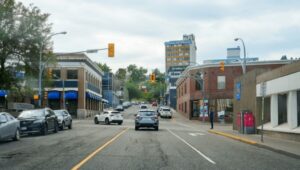
Urban development has also shaped Tranquille Road and surrounding neighbourhoods. While Kamloops has grown considerably over time, it still retains a quieter atmosphere than many larger cities. Tranquille Road includes residential areas, businesses, retirement communities, and services that support both long-term residents and students. The city’s hills influence where neighbourhoods can expand, while the rivers continue to define the broader geography of the area. Unlike large metropolitan centres dominated by high-rise buildings, Kamloops maintains a balance between urban development and access to natural landscapes.
In recent decades, stewardship efforts have become more visible throughout the city. The City of Kamloops promotes water conservation because of the region’s dry climate and limited water resources. FireSmart initiatives encourage homeowners to reduce wildfire risks around their properties. Recycling programs, composting initiatives, and community gardens have also become more common. These efforts reflect changing attitudes toward the environment. Earlier generations often emphasized economic development and resource extraction, whereas many people today are increasingly concerned about sustainability and environmental responsibility.
Researching the environmental history of Tranquille Road changed the way I think about the place where I live. Before this exercise, I mostly noticed how peaceful Kamloops felt and appreciated the surrounding hills and open spaces. I now understand that these features are part of a much longer story involving Indigenous stewardship, settlement, transportation, ranching, environmental change, and urban growth. The environment around me is not static. It has been shaped by both human choices and natural processes over thousands of years. Understanding this history makes me appreciate my neighbourhood in a new way and reminds me that the decisions people make today will continue to shape Kamloops for future generations.
Sources
- Tk̓emlúps te Secwépemc. “About Us.” https://tkemlups.ca
- City of Kamloops. “Environment and Sustainability.” https://www.kamloops.ca
- Kamloops Museum and Archives. https://www.kamloops.ca/our-community/arts-culture-heritage/kamloops-museum-archives
- BC Grasslands Conservation Council. https://bcgrasslands.org
- BC Wildfire Service. https://www2.gov.bc.ca/gov/content/safety/wildfire-status