Local Environmental History of Castlegar, BC
August 27, 2026 By: Makena Stratton
Location: Prince Avenue Castlegar, British Columbia
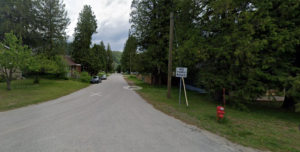
I live in the small town of Castlegar, which is a part of the West Kootenays in Southern British Columbia. I live on Prince Avenue, which is a dead-end road in a neighborhood known to the locals as the Shewchuck neighborhood, located on the outskirts of downtown Castlegar. It is an older neighborhood, with my neighbor’s house being built in 1957. Living in Castlegar and being a history major has given me an opportunity to understand how the community around me has changed over time and how Castlegar’s history is still seen today throughout the town.
Castlegar is located at the confluence of the Columbia and Kootenay rivers and was first home to different Indigenous groups, and later a strong Doukhobor community settled here. This region was first inhabited around ten thousand years ago by the Sinixt and the Ktunaxa Indigenous peoples. There is a lot of Indigenous history in this area, especially in the downtown area, such as Millennium Park and Zuckerberg Island, which are both located at the confluence of the Columbia and Kootenay rivers, which would have provided rich and fertile lands for the Indigenous to settle. Not only are Millennium Park and Zuckerberg Island at the confluence of both rivers, but they are also home to a valuable plant known as camas that the Indigenous used as a food source and for trade. Growing up here, I remember seeing a lot of the blue and purple flowers from camas, although in the past ten years there has been major development at Millennium Park that has disrupted and displaced some of the camas. The city of Castlegar built a new playground near some of the camas plants at the park, but they were able to move some of the plants into a camas conservation area about one acre in size. Even though there were measures taken to move the camas plants, it is not the same as it would have been if they let them alone where they could continue to flourish. Going to Millennium Park today, you can still see much of the camas as well as a protected area with a small fence; however, a playground was built, which disrupted the land and displaced the camas.
Additionally, Europeans began arriving in the late eighteenth century for westward expansion due to the fur trade and again during the mid nineteenth century when gold was discovered in the area. Unfortunately, with Europeans moving westward, this brought diseases such as smallpox, which contributed to wiping out large numbers of the Indigenous population in this area. Steady European settlement in this area really began in the mid-nineteenth century with the first railroad being built in 1892, and shortly after, Doukhobors began settling here and building a long lasting community in the early twentieth century.
The Doukhobors were a religious pacifist group that emigrated from Russia in 1899, where they first found settlement in Saskatchewan and later came to the West Kootenay region in towns such as Castlegar, Nelson, and small communities outside of Castlegar such as Brilliant, Thrums, and Tarry’s. When the Doukhobors arrived in the early twentieth century, they began to build communities, farms, and start orchards, but this also contributed to displacing the Indigenous people who were here before them, as well their farming and orchards disrupted Indigenous burial grounds in this area. The Doukhobors that settled here did have lasting impacts on Castlegar, with many Doukhobor families still living here today. As well, Castlegar is home to the Doukhobor Discovery Center, which is a dedicated museum to the Doukhobors to look back on how they used to live by looking at preserved historical pieces and tools.
Shortly after the Doukhobors settled here, the introduction of pulp mills and smelters such as Teck became the economic drivers and created an opportunity for Castlegar to expand. Waldie Island pulp mill was one of the first in Castlegar; it was the main hub for work in the area during the 1920s but later burnt down in the 1960s, and the area was then replaced with sustainable and natural sewer treatment ponds. The area is now known for different types of birds such as herons, bald eagles, and ospreys, which can reveal that the habitat here is still in a considerably good condition to be home to wildlife even after the effects of the mill being burnt down. On the other hand, with Castlegar being at the confluence of two major rivers, the introduction of hydrodams began as well. The Hugh Keenleyside Dam, only located about five minutes from my house, became a huge industry in the mid 1900s, it brought many workers to the area and gave them a lot of opportunity. Even though the dam brought a lot of good economics to the area, the land suffered; many areas had to be flooded out with the introduction of the dam, and many animal habitats, such as fish, had changed due to it. The rivers in Castlegar can tell you a lot about its history. The confluence provided fertile lands for different Indigenous groups as well as for the Doukhobors; it also created jobs for many people and still does today, yet it also displaced the natural habitat of some wildlife and fish.
As industries continued to grow in Castlegar and the surrounding areas, smaller communities such as Kinnaird developed in 1948, and a few years after, in 1974, Kinnaird and the town of Castlegar merged together to create the city of Castlegar. This merger helped Castlegar to become what it is today, and even though Castlegar is still a fairly small city, it has a variety of history. From the first settlers here being the Sinixt and Ktunaxa to Doukhobor emigration and industrial development, all brought changes to the natural environment here that have shaped the city’s history.