Saanich, BC
July 25, 2026 By: Matthew Coxon
Location: 4000 Shelbourne Street
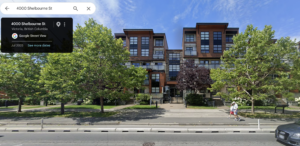
Although I was born and raised in Kamloops, I currently reside in Saanich on Vancouver Island and have called this place my home over the past 10 years. I live along Shelbourne Street, one of the central arteries connecting Saanich, which takes its name from the region historically known as the Shelbourne Valley. The apartment complex where I now live occupies land that likely would have been open Garry oak meadow less than two centuries ago. Today, I look out my window and see a single Garry oak tree, a symbol of what may have once been the norm. Although today Shelbourne Street is characterized by apartment buildings, shopping centres, and busy roads, the landscape has undergone thousands of years of ecological change through Indigenous stewardship, colonial settlement, urban expansion, and more recent conservation efforts.
Firstly, Saanich is part of the historical lands of the Lekwungen speaking peoples, including the Songhees and Esquimalt nations, whose history with the area goes back over 4000 years.[1] This marks the earliest known human occupation of the area and the landscape looked dramatically different from the urban environment seen today. During this period, the Shelbourne Valley consisted largely of Garry oak meadows intermixed with Douglas-fir forests. This diverse ecosystem was home to a wide variety of species ranging from camas and berries to insects and birds.[2] Indigenous peoples were the primary caretakers of this ecosystem, maintaining the land through cyclical burning practices and routine harvesting, creating productive food landscapes rather than leaving the environment untouched.
For thousands of years, the landscape was managed and occupied by Indigenous peoples before the arrival of European settlers in the nineteenth century.[3] Upon their arrival, these early settlers converted much of the valley into farmland. Forests were cleared, livestock was introduced, and the natural environment was altered substantially. Additionally, the construction and operation of Fort Victoria relied heavily on the labour and knowledge of local Indigenous peoples which contributed to increased interaction around the colonial settlement. It’s not surprising to think that the arrival of settlers led to further ecological changes throughout the area.
Following the establishment of Fort Victoria, existing Indigenous trails through the Shelbourne Valley became increasingly important travel routes connecting communities such as Cordova Bay with the growing colonial settlement.[4] This led to further development of the area, specifically around the Bowker Creek which originally flowed throughout the valley. Much of Bowker Creek was eventually channelized, reducing natural drainage while increasing stormwater runoff and the loss of aquatic habitat. The wetlands were drained to prevent flooding, leading to the eventual development of roads and neighbourhoods at the expense of the natural habitat.
Over time, Saanich continued to cement itself as an extension of Victoria, largely driven by suburban expansion during and after the Second World War.[5] Victoria’s population surged as workers relocated to support the military and naval developments but following the Second World War, expansion to suburbs was on the rise due to federal government policy.[6] Schools and shopping centres were built, roads were widened, and denser housing was developed.
This expansion and development also brought about a wide variety of invasive species, either transported deliberately or accidentally. Additionally, the introduction of these species in addition to the arrival of more people forced certain species, such as wolves and black bears, to find new homes. However, some of the more problematic invaders are still being fought with today, such as the English Ivy and the Scotch Broom.[7] Both introduced deliberately for landscaping and ornamental reasons, these species outcompete native plants and prevent them from surviving. As an example, Scotch Broom can survive in the soil for decades, putting a significant strain on the natural Garry Oak ecosystem that the Shelbourne Valley is known for.
With these factors in mind, it should not be surprising that an influx of settlers who drastically altered the environment would lead to significant reductions in the local ecosystems.[8] Recent estimates suggested that the Garry Oak Ecosystems previously occupied 87% of the Shelbourne Valley’s total land area. More recent reports suggest that Garry Oak Ecosystem has dwindled to 1.5% of the Valley’s total land area. However, this human impact has not gone unnoticed. More recently, efforts have been made to restore the Bowker Creek watershed, where Garry oak ecosystems once thrived. Recent redevelopment projects along the Shelbourne corridor have been designed to reduce runoff entering Bowker Creek, demonstrating a growing recognition that urban development can play a role in ecological restoration. By utilizing ecosystem mapping and urban planning, interventions within the Saanich community have not only acknowledged the environmental consequence of generations of human activity but made efforts to restore this culturally vital and biodiverse ecosystem.[9]
Looking at the lone Garry oak tree outside my apartment, it is easy to forget that this species once dominated the entire valley. Learning the ecological history of my neighbourhood has changed how I see the landscape. What appears today as an ordinary suburban community is actually the product of thousands of years of environmental change, and its future will depend on whether restoration efforts can successfully balance continued growth with the preservation of the ecosystems that have shaped this place for thousands of years.
[1] Diverse Saanich early settlement of Saanich Peninsula, accessed July 25, 2026, https://www.saanich.ca/assets/Parks~Recreation~and~Community~Services/Documents/Archives~Collections~and~Research/Category~10/Diverse%20Saanich%20Online%20Exhibit%202.pdf, 2.
[2] Celeste M. Barlow, Marlow G. Pellatt, and Karen E. Kohfeld, “Garry Oak Ecosystem Stand History in Southwest British Columbia, Canada: Implications of Environmental Change and Indigenous Land Use for Ecological Restoration and Population Recovery,” Biodiversity and Conservation 30, no. 6 (March 28, 2021): 1655–72, https://doi.org/10.1007/s10531-021-02162-2, 2.
[3] “Fort Victoria (British Columbia) – Wikipedia,” Wikipedia, accessed July 25, 2026, https://en.wikipedia.org/wiki/Fort_Victoria_(British_Columbia).
[4] District of Saanich Planning Department 2017 Shelbourne Valley Action Plan, accessed July 25, 2026, https://www.saanich.ca/assets/Community/Documents/Planning/Full%20SVAP%20April,%202017%20small.pdf, 20.
[5] Blackouts and gas attack scares: Victoria during the Second World War – Capital Daily, accessed July 25, 2026, https://www.capitaldaily.ca/news/victoria-second-world-war-ve-day.
[6] Canada is a suburban nation because of post-Second World War Government policy, accessed July 25, 2026, https://www.canu.ca/post/canada-is-a-suburban-nation-because-of-post-second-world-war-government-policy.
[7] Saanich Parks, Recreation and Community Services saanich.ca/parks controlling, accessed July 25, 2026,https://www.saanich.ca/assets/Community/Documents/Environment/naturescape/Invasive%20Plants%20Booklet%202026%20update.pdf.
[8] District of Saanich Planning, 28.
[9] “Garry Oak Ecosystems Recovery Team,” Garry oak ecosystems recovery team, accessed July 25, 2026, https://goert.ca/.